Technologies evolve over time, and that means new fire, electrical, and related hazards also emerge. The National Fire Protection Association (NFPA) establishes many of the trusted standards for navigating the risks to ensure people’s safety while maintaining regulatory compliance. Governments and organizations, such as the Occupational Safety and Health Administration (OSHA), recognize these standards and incorporate them into laws and regulations.
The way you manage your property may change as these standards evolve. Property managers, employees, and fire watch guards share responsibility for preventing fires and taking appropriate action when they occur. To help you understand your responsibilities, here’s what property managers need to know about NFPA fire watch requirements.
What Is a Fire Watch?
A fire watch guard is a person trained to monitor properties or work areas from fire hazards when:
- The fire protection system is broken or unavailable, even for temporary or routine maintenance.
- High-risk activities, such as “Hot Work,” can increase the risk of ignition.
- A fire marshal determines that an activity requires a fire watch, such as special events with pyrotechnics.
Fire watch guards ensure safe conditions during these activities. They can also stop operations if unsafe conditions develop or sound the alarm in the event of a fire.
A fire watch patrol must be able to observe every area that can be ignited. This means in some cases, you may need more than one fire watch guard. Local regulations may vary by jurisdiction; you can find specific requirements through the city fire department, fire marshal, or building department. Follow the most stringent requirements to ensure compliance.

Major NFPA Fire Watch Requirements
There are more than 300 NFPA codes and standards. However, for property managers in 2026, the key information on fire watches is primarily covered in NFPA 51B, the Standard for Fire Prevention During Welding, Cutting, and Other Hot Work. Here are the main considerations:
Management Responsibilities
According to NFPA 51B, management is responsible for the safe operations of hot work activities. You need to establish permissible hot-work areas, ensure everyone involved is familiar with the standards, and designate the permit authorizing individual (PAI). You should also ensure all teams operating on the site have adequate training to understand the relevant risk factors.
If hot work is being conducted by a third-party contractor, you, as the property owner, are responsible for ensuring the contractor has the necessary permits.
PAI Responsibilities
The PAI will determine whether fire watch guards are necessary based on the circumstances—for instance, if combustible materials are within a 35-foot radius. The PAI can also be the supervisor, property owner, health and safety administrator, or foreperson, provided they have the necessary training. If they determine that a fire watch guard is not required, the PAI must make a final check for smoldering fires 30 minutes after the completion of hot work operations.
Fire Watch Guard Responsibilities
When a fire watch guard is required, they should monitor the area for one hour after operations are complete. The PAI can reduce this duration to 30 minutes if there are no fire hazards. Heightened risk can increase the required monitoring duration to more than three hours.
Fire Extinguishing Requirements
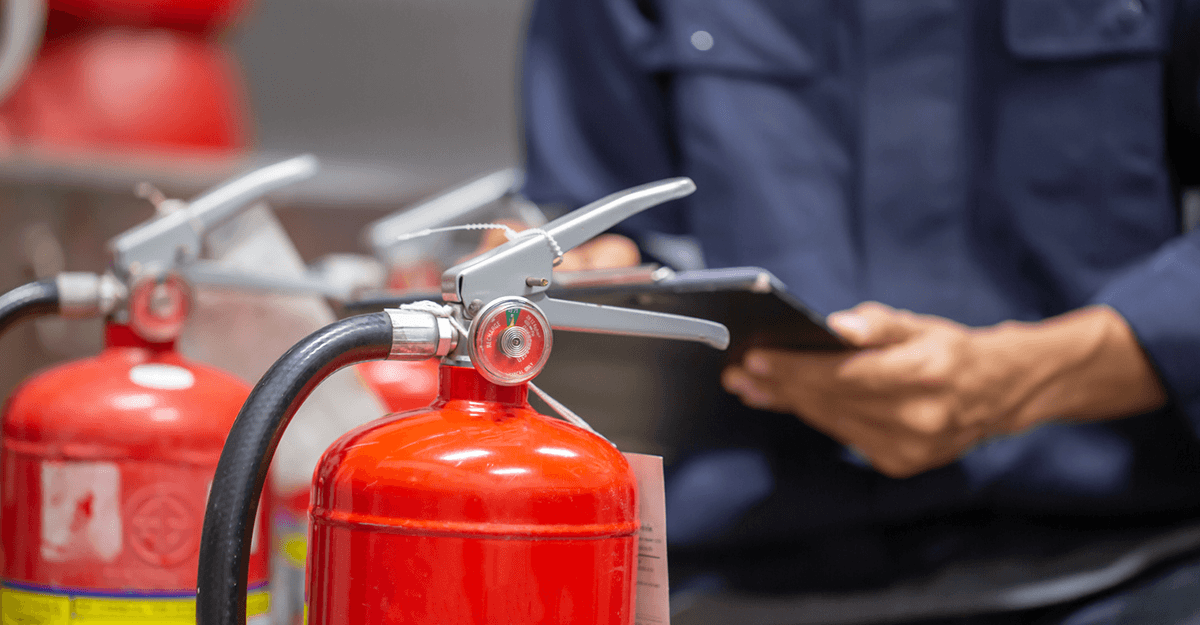
Each worksite should have a portable fire extinguisher of the right type and size. Fire extinguishers are classified by fire class — a property with on-site cooking facilities requires a different extinguishing agent than one with more standard combustible materials. A fire watch guard can help you understand your property and provide guidance on fire risks.
Hot Work Requirements
Hot work pertains to any activity that involves welding, cutting, burning, brazing, soldering or other activities that produce a source of ignition, such as sparks. Welding, cutting and roofing operations are common examples of hot work activities. In case of hot work activities, you need a fire watch guard if the area has:
- Combustible materials closer than 35 feet.
- Combustible materials located farther than 35 feet, but can be easily ignited by sparks.
- Wall or floor openings within 35 feet that expose combustible materials.
- Combustible materials adjacent to the opposite side of the walls, partitions, ceilings or roofs that are likely to ignite.
Many hot-work situations, particularly temporary ones, require a permit signed by the PAI. The permit certifies that an authorized party has reviewed the site and accounted for all potential fire hazards. The PAI must inspect the hot work area at least once every shift during the time period. You can obtain hot work permit applications through the local government, the NFPA or certain insurance providers.
Why NFPA Fire Watch Regulations Matter to Property Managers
Buildings — whether they’re commercial, residential or industrial properties — often come with complex electrical systems and critical operations. Given they have high occupancy, navigating the risks is essential. As a property manager, you have significant responsibility in assigning the right personnel, especially when assigning the PAI. The PAI must also be well-versed in the requirements for assigning fire watch guards.
According to NFPA, about 6% of fires in industrial properties and many fires in other properties are caused by cutting and welding operations. Many of these fires have been started by sparks alone. To avoid such situations, property managers in 2026 need to know how to incorporate the NFPA fire watch requirements into their management systems.
Implementation Guide for Property Managers
Knowing the NFPA fire watch requirements is just the first step. To help you navigate the compliance requirements, consider performing the following:
- Conduct a comprehensive risk assessment: Before any hot work operations begin, you need to identify potential fire hazards, determine whether you need fire watch guards and how many of them you need. Consider your maintenance schedule—are there any instances when your fire extinguishing system may be inoperable?
- Draft a fire watch plan: A fire watch plan involves the safety protocols everyone must follow in case of hot work activities or impaired fire protection systems. You should draft this plan in accordance with the most stringent standards. For instance, these standards could be the NFPA requirements or local standards from the fire marshal’s office.
- Select the right personnel: There are specific requirements for a fire watch guard and PAI. For instance, a PAI generally cannot be the hot work operator. The fire watch guard should also have the necessary training and must know how to use the appropriate fire extinguishing equipment.
- Work with professional fire watch services: Making your staff complete the required fire watch training is not always feasible or practical. It can be hard to predict when fire extinguishing systems can break down, and you’ll usually need fire watch guards in those instances. Working with professional services ensures you have the right expertise to get the work done.
Why Trust National Firewatch?
National Firewatch has been working with property managers across the U.S. to deploy fire watch guards when needed. Our fire watch experts have years of experience working with apartment complexes, office buildings, nursing homes, hospitals, construction sites, and other worksites that may require fire watch services.
We’ll provide expert supervision of hot work activities—whether welding, cutting, or torching—and cover other significant events that may pose a fire risk. You can count on our expertise in applicable standards, such as OSHA and NFPA, to help property managers remain compliant with requirements.
Work With Experienced Fire Watch Guards Today
National Firewatch can deploy the fire watch guards you need, whether you’re managing a commercial or residential property, construction sites, or events. You may also be preparing for hot work or responding to an emergency. Our fire watch guards can arrive within hours of contact and conduct fire risk assessments. Our team has the tools and expertise that can help keep your jobsite safe. Contact us today to get started!
