Any employer’s top priority should always be the safety of their staff and anyone who comes into contact with their business. One way businesses can protect their employees and anyone nearby is through a fire watch. Designed to reduce the risk of fire, a fire watch must be conducted by a qualified person. A qualified person isn’t legally required to hold fire watch certification, but they must complete fire watch training and may not be assigned to other duties while conducting fire watch.
Why Is a Fire Watch Necessary?
A fire watch is a legal requirement that’s designed to protect buildings when the Life Safety Code can’t be met for a certain period. This length of time depends on the reason why the code can’t be met, such as during the construction or maintenance of fire safety systems.
A fire watch must also be posted when any hot work is carried out outside designated hot work areas, which includes any activity involving equipment that may ignite a fire. This commonly includes welding, drilling, and cutting.
The fire watch requires at least one person to regularly patrol the site to check for signs of fire, allowing time to extinguish the fire or evacuate the building. To further protect the building and its occupants from fire, the fire department must also be notified of the fire watch.
If a business fails to implement a fire watch when required, it could face heavy fines, immediate project shutdown, and denial of insurance claims for any fire damage.
General Fire Watch Training Requirements
A fire watcher must receive adequate training to be qualified to perform a fire watch. Fire watch guard qualification training typically includes the following requirements:
- Good vision: The fire watcher must be able to spot the signs of a fire.
- Good fitness and mobility: The fire watcher must be able to patrol the area with ease and act quickly if they spot signs of a fire.
- Mental alertness: The fire watcher must be able to recognize fire signs and understand their responsibilities.
- Authority to stop work: The fire watcher may need to order workers to stop work and evacuate, and must have the authority to do so.
- Reliable communication: The fire watcher must have the means to quickly communicate any incidents or potential incidents.
- Background checks: The fire watcher’s background will be reviewed to ensure there’s no reason to question their trustworthiness.
- Certificate of education: The fire watcher must have a high school diploma or a GED.
Core Aspects of Fire Watch Training
Fire watch training focuses on recognizing fire hazards, taking preventive actions, and knowing what to do if a fire occurs. Specifically, your new guards will learn:
Fire Extinguisher Proficiency
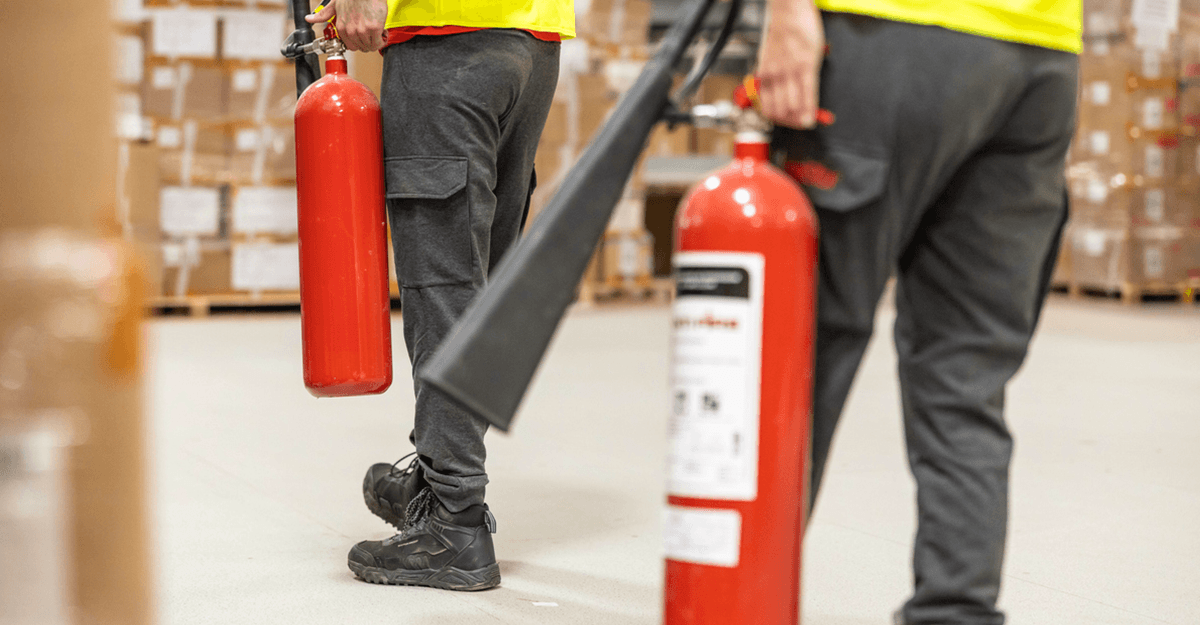
One of the first lines of defense against a fire is a fire extinguisher, so it’s vital that a fire watch guard be proficient in its use. During their training, guards learn when and how to use the various types of fire extinguishers.
Emergency Activation Protocols
Emergency activation protocols tell a fire watcher how to raise the alarm in the event of a fire. This knowledge and training allow a fire watch guard to act quickly to protect the property and its occupants.
Fire Classification
To safely extinguish a fire, a fire watch guard must properly classify it. Fires can burn using different sources, which affects how they must be extinguished. Guards must be able to recognize and classify:
- Class A fires are any fires started with a flammable material, such as paper, wood, or rubbish. These are the easiest fires to extinguish and can be put out by any means.
- Class B fires are started with chemicals, such as oil, gasoline, or alcohol. Class B fires are most easily extinguished with CO2 or foam extinguishers. Water shouldn’t be used to extinguish these fires, as it can cause the fire to grow.
- Class C fires are caused by electrical equipment failure. The electrical source must first be shut off before a class C fire can be extinguished with halogenated extinguishers.
- Class D fires are started by combustible metals such as sodium, magnesium, or lithium, and are best extinguished with dry powder agents.
- Class K fires are started by cooking materials or appliances. Class K fires should be extinguished with wet chemical extinguishers, but never with water.
Documentation
Fire watch guards must be able to provide evidence that they carried out their watch as planned, which is why documentation is vital. Any fires or other events must also be documented, as must evidence of the training that any employees involved in the fire watch received.
Certification Standards
If you or your team members choose to pursue certification to demonstrate a higher level of fire watch training, you can choose from various organizations to obtain it. Each group has different fire watch certification requirements, but training and standards are generally based on these regulations:
OSHA 29 CFR 1910 and 1926
The heart of fire watch training and certification is the federally mandated Occupational Safety and Health Administration (OSHA) standards. While OSHA 29 CFR 1915.504 is specifically targeted at shipyard employment, the rules it establishes are readily applicable to fire watches in other environments. This framework outlines when a fire watch is required and the fire watcher’s key responsibilities.
The OSHA 29 CFR 1915.508 standard provides further detail and specifies the training required for employees on fire watch duty, including fire behavior basics, the potential adverse health effects of fire exposure, and the physical characteristics of hot work.
National Fire Protection Association (NFPA)
NFPA standards build on OSHA requirements, providing more detailed instructions on how and when fire watches should be conducted. NFPA fire watch training teaches individuals how to:
- Recognize and understand the relevant fire safety standards.
- Understand the different types of hot work.
- Evaluate the risks posed by each type of hot work.
- Describe and understand hot work permit requirements.
State Requirements
Many states adopt the NFPA standards and require OSHA fire watch training, but some states have adapted these regulations or added additional requirements. For example, California’s Code of Regulations, Title 19, and Oregon’s Administrative Rules, Chapter 629, provide additional requirements.
Many local municipalities also have more detailed, specific regulations that must be followed.

Benefits of Outsourcing Your Fire Watch
It can be useful to have on-site employees trained for fire watch, but it is not generally recommended. Since fire watch must be conducted by a trained individual with no other on-site commitments, best practice is typically to hire an external vendor. In addition to compliance, there are other benefits to outsourcing your fire watch responsibilities, such as:
- Cost reduction: Outsourcing can eliminate the cost of fire watch training.
- External overview: Any flaws in internal fire protocols can be flagged by objective, experienced fire watch professionals.
- Constant coverage: Many fire watch services are available around the clock, whereas employee fire watchers may only be available during working hours.
- Flexibility: It’s much easier to quickly scale or adjust your fire watch with an outsourced service.
- Expertise: Professional fire watchers will likely have knowledge, experience, and training that your fire watch-trained employees will lack.
Why Trust National Firewatch?
A fire watch is a crucial process that protects people and property from certain fire hazards. At National Firewatch, our guards’ years of experience at locations across the U.S. mean we’re better equipped than anyone to deliver reliable fire watch services with minimal lead time. This enables you to respond quickly to any situation, keeping your business operational and safe.
Rapid Fire Watch Deployment Across the U.S.
At National Firewatch, we understand the importance of an effective fire watch better than anyone. That’s why we’re proud to offer fire watch services nationwide. With rapid deployment, our highly trained and experienced fire watch guards can ensure your organization complies with all federal and local fire watch regulations.
To learn more about our fire watch services and how we can support your business, contact us today.
